In the midst of a health-conscious world, a silent deficiency is lurking unnoticed in many: a lack of Vitamin D, the crucial “sunshine vitamin.” Despite its pivotal role in overall health and particularly in immune function, an alarming number of individuals remain unaware of their deficient states. This deficiency goes beyond mere numbers; it’s a gateway to weakened immunity and increased vulnerability to various health issues. As we embark on a journey through the realms of Vitamin D supplementation, we uncover not just the science behind this essential nutrient but also its profound impact on our well-being. From the bustling streets of Boston to the serene corridors of hospitals, stories unfold, revealing the transformative power of Vitamin D. This is a tale of health, science, and the potential that lies in a simple, yet often overlooked, vitamin.
The Science of Vitamin D Supplementation: A Deeper Dive
Vitamin D, often branded as the ‘sunshine vitamin’, is more than just a nutrient; it’s a biological powerhouse essential for our well-being. It transcends the typical roles of a vitamin, acting more like a hormone that orchestrates a multitude of bodily functions.
When sunlight touches our skin, it ignites a miraculous process converting cholesterol into Vitamin D, showcasing nature’s own pharmacy at work. This vitamin is pivotal in calcium absorption, a cornerstone for robust bones and teeth. But its influence extends much further, touching every corner of our health landscape.
In the realm of immunity, Vitamin D emerges as a guardian. It boosts our immune system’s ability to fend off invaders and regulates immune responses, reducing the risk of overactive immune conditions. Its receptors, present in almost every cell, hint at its extensive reach in our body’s symphony of functions.
Recent scientific explorations have unveiled Vitamin D’s role in cardiovascular health, muscle function, and even mental health. It’s not just a nutrient; it’s a vital agent of health, steering our systems towards optimal functioning.
This deeper understanding of Vitamin D and Vitamin D supplementation challenges us to reconsider our relationship with this vital nutrient. As we uncover more about its extensive roles, it becomes clear that Vitamin D is not just a part of our diet; it’s a cornerstone of our health.
Investigating Vitamin D Levels and Immunity
In the shadow of the bustling modern life, a silent threat lurks – Vitamin D deficiency. This deficiency, often unnoticed, can stealthily undermine your immune system. Vitamin D, a linchpin for immune health, becomes crucial in this narrative. Imagine your immune system as a finely tuned machine; now picture it running low on its main fuel – Vitamin D.
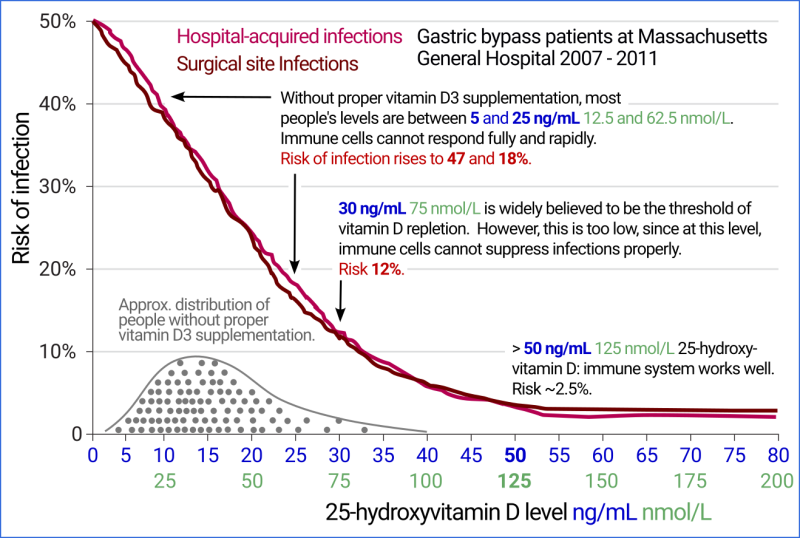
Scientific evidence underscores a startling fact: for a well-oiled immune system, Vitamin D blood serum levels should ideally be higher than 50 ng/mL. But what happens when these levels dip below 30 ng/mL? It’s not just a minor drop; it’s a plunge into a state where your immune defenses are weakened, leaving you vulnerable to a host of health problems.
The thought of an impaired immune system in a world brimming with health challenges can be unsettling. This realization is not meant to alarm, but to awaken awareness about the critical role of Vitamin D and the silent risk posed by its deficiency.
Alarmingly, research indicates that a staggering 95% of Americans are Vitamin D deficient, even during the sun-drenched summer months. This widespread deficiency can be largely attributed to the Western sedentary lifestyle and a lack of Vitamin D supplementation. Even when we step outside, the widespread use of sunscreen, while protecting against skin damage, inadvertently blocks Vitamin D synthesis. This paradoxical situation – where even in the abundance of sunlight, Vitamin D deficiency prevails – underscores the urgent need for awareness and action in addressing this silent health crisis.
Case Studies and Clinical Evidence
The 2011 Endocrine Society guidelines recommend a target Vitamin D level of 40 ng/mL to ensure most individuals maintain levels above 30 ng/mL. Toxicity concerns arise only at levels above 150 ng/mL, leading to a safety upper limit of 100 ng/mL. This guidance is supported by research, including the 2014 Boston hospital study, which analyzed the correlation between pre-operative Vitamin D levels and the risk of infections in patients undergoing gastric bypass surgery. It found dramatically lower infection rates at Vitamin D levels of 50 ng/mL or higher, highlighting the critical role of Vitamin D in immune system functioning and its broader implications in public health. This study underscores the widespread issue of Vitamin D deficiency impacting immune responses to pathogens, cancer cells, fungi, and viruses.
Sepsis, the leading cause of death in U.S. hospitals, presents a daunting challenge, with about 6% of all hospitalizations and 35% of in-hospital deaths attributed to it. The complexity of sepsis, which can be triggered by various infections, and the difficulty in identifying the causative pathogen in many cases, heighten the need for effective preventive strategies.
In this battle against sepsis, Vitamin D, particularly in the form of calcifediol, emerges as a promising ally. Calcifediol, or 25-hydroxyvitamin D, is a form of Vitamin D that is more readily absorbed by the body compared to Vitamin D3. Prof. Wimalawansa recommends a single oral dose of calcifediol calculated at 0.014 mg per kilogram of body weight. For an average adult, this equates to approximately 1 milligram. This dosage efficiently raises Vitamin D levels in the bloodstream to above 50 ng/mL within just 4 hours (instead of 3 months, which is common for Vitamin D supplementation), a rapid response crucial in the context of sepsis prevention.
The elevated Vitamin D levels achieved through calcifediol supplementation are sustained over several days to a week, but continuous monitoring and supplementary dosing may be necessary to maintain these levels. Interestingly, a 1 mg dose of calcifediol is roughly equivalent to 160,000 IU of Vitamin D supplementation, providing a potent boost without the risk of toxicity in most cases. Therefore, routine blood tests for Vitamin D levels are often not required unless there is a specific concern for excessive 25-hydroxyvitamin D.
Incorporating calcifediol into the management and preventive strategies against sepsis could be a game-changer, potentially reducing the high mortality rates associated with this condition in hospital settings. This approach not only underscores the significance of maintaining optimal Vitamin D levels but also highlights the need for a paradigm shift
in how we view and utilize Vitamin D and its derivatives in the clinical setting. By adopting such proactive measures, hospitals could significantly reduce the incidence and mortality of sepsis, ultimately saving numerous lives.
Sunfluencer’s Unique Offering
Sunfluencer’s unique offering in the world of health supplements sets a new standard for comprehensive wellness support. Their Vitamin D supplement is a masterful blend of essential nutrients, combining Vitamin D with Vitamin K2 and Magnesium. This carefully crafted formula ensures not only enhanced absorption and effectiveness but also addresses a wider range of health needs than Vitamin D alone.
Vitamin K2 works in harmony with Vitamin D, directing calcium to where it’s needed most – your bones – and away from where it could be harmful, like arteries, thus preventing calcification. Magnesium, on the other hand, plays a crucial role in over 300 enzymatic reactions in the body, including those necessary for the metabolism of Vitamin D. Together, these ingredients create a synergy that supports bone health, cardiovascular health, and overall well-being.
Moreover, Sunfluencer has recognized the importance of Omega-3 fatty acids in overall health. Over 90% of Americans are deficient in Omega-3s, which are vital in fighting inflammation throughout the body. Including Omega-3 supplements in their product line addresses this widespread deficiency. Omega-3s, taken in conjunction with Vitamin D, enhance the latter’s effectiveness since Vitamin D is a fat-soluble vitamin. This combination ensures that your body receives the full spectrum of benefits from both supplements.
Sunfluencer’s monthly subscription model, priced at only 54 USD, offers the “SUN” (Vitamin D) and “SEA” (Omega-3) supplementation, making it both convenient and cost-effective. This approach to supplementation is not just about treating symptoms; it’s about addressing the root causes of health issues.
In essence, choosing Sunfluencer is akin to choosing the best health insurance for your body. It’s about investing in a solution that supports the body’s fundamental needs and promotes long-term health and vitality. With Sunfluencer, you’re not just supplementing; you’re taking a proactive step towards a healthier life.