In the journey towards improved health, Vitamin D emerges as a critical but often neglected nutrient for African Americans. This ‘sunshine vitamin’ is essential for robust immune function, mood regulation, and in warding off chronic diseases. However, the large majority of the African American community faces a severe Vitamin D deficiency. This article explores why supplementing with Vitamin D is not merely a suggestion but an imperative for African Americans, delving into the unique factors behind this deficiency and the substantial health benefits of maintaining adequate Vitamin D levels.
Why are African Americans particularly susceptible to Vitamin D deficiency, especially in the Northern Hemisphere? Here are key factors:
- Evolutionary Skin Adaptation: The higher melanin content in African American skin, an evolutionary adaptation for sun protection, significantly reduces Vitamin D synthesis from sunlight.
- Geographical Latitude: Living further from the equator means less UVB light year-round, crucial for Vitamin D synthesis.
- Reduced Sunlight Exposure: High melanin levels necessitate longer sun exposure to produce sufficient Vitamin D, a challenge in the Northern Hemisphere with less intense sunlight.
- Sedentary Lifestyle: Increasingly indoor lifestyles limit sun exposure, exacerbating Vitamin D deficiency risks.
- Western Diet: Modern diets, often lacking in natural Vitamin D sources, contribute to lower levels of this nutrient.
- Urban Living: High-rise buildings and pollution can block sunlight, reducing opportunities for natural Vitamin D production.
This insight sheds light on a common health observation: the increase in illnesses during the winter months. It’s not so much a ‘flu season’ as it is a ‘vitamin D deficiency season.’ With reduced sunlight and colder weather, our vitamin D levels naturally drop, weakening our immune defenses. Now, consider the compounded effect of being chronically deficient in vitamin D throughout the year, as a result of the factors mentioned above. This chronic deficiency can significantly impact overall health, making it more challenging for the body to fend off infections and maintain optimal well-being.
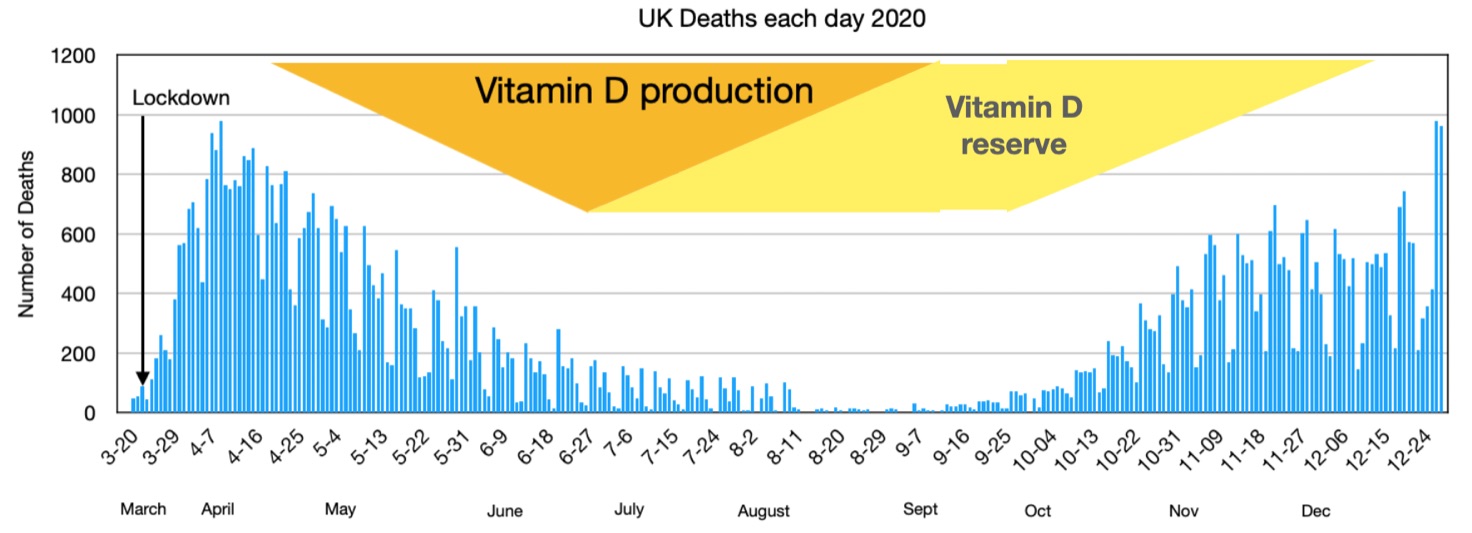 Figure 1. The Principle of Seasonality. Vitamin D reserves typically diminish during the winter, which is why we are more susceptible to illness.
Understanding the Link: Vitamin D Deficiency and Increased Illness Risk
This publication from October 2020 demonstrates a strong correlation between illness (specifically COVID-19) and Vitamin D blood serum levels. The publication reveals, “Vitamin D deficiency was found in 82.2% of COVID-19 cases and 47.2% of population-based controls (p<0.0001).” This is particularly noteworthy because the publication contains a significant bias: optimal Vitamin D blood serum levels start at 50 ng/mL, not at >30 ng/mL as defined in the study.
 Figure 2. Percentage of COVID-19 cases (excluding those on vitamin D at admission) and controls according to different intervals of serum 25OHD levels.
The ~50 ng/mL target has been vindicated by a large body of research, one strong example being the 2014 research of doctors in a Boston hospital on the risk of both hospital-acquired and surgical site infections, as a function of pre-operative 25-hydroxyvitamin D levels that is depicted in the graphic below. Compared to the 30 ng/mL level declared ‘sufficient’ by the WHO and the Endocrine Society, the likelihood of getting ill with a vitamin D blood serum level higher than 50 ng/mL is five times lower. This means that the likelihood of getting ill is virtually ‘close to zero’.
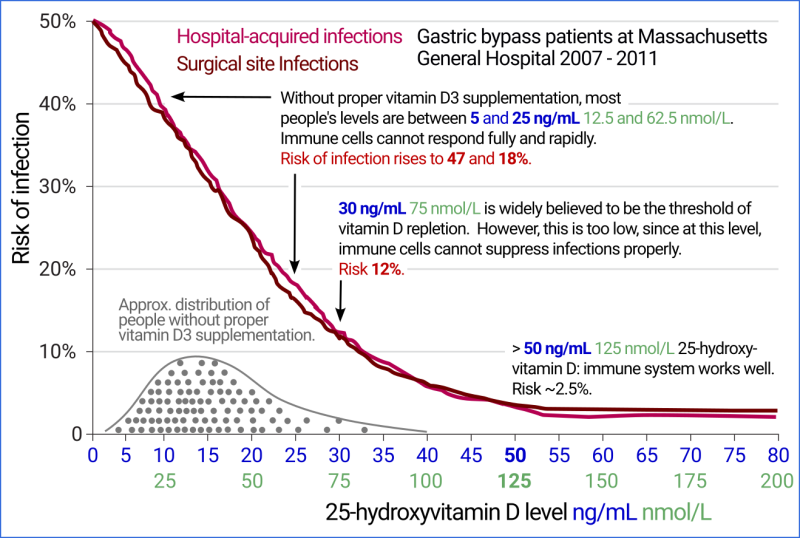 Figure 3. For those patients with 50 ng/mL or more circulating 25-hydroxyvitamin D (which would have been attained largely or entirely by proper vitamin D supplementation), the risk of hospital acquired and surgical site infections, separately, were about 2.5%.
Vitamin D Deficiencies of different Ethnic Groups
So, let’s examine the vitamin D blood serum levels of ethnic groups in both seasons, summer and winter. As already described above, people with lighter skin color, especially in more northern latitudes, have an evolutionary advantage, as shown in Figure 4. However, only 17% of Caucasians had a vitamin D blood serum level of at least 30 ng/mL in the summer and 7% in the winter. The situation is particularly dire for the African American population, which was only 2% ‘sufficient’ even in the summer; and here we are talking about the definition of ‘sufficiency’ set by the WHO, not the scientifically substantiated 50 ng/mL.
 Figure 4. Vitamin D deficiency is much more common in people that got higher melanin levels.
The fact that higher levels of melanin negatively impact the body’s ability to produce vitamin D explains why we see more severe cases of COVID in people with darker skin in Western countries. The following graphic illustrates the correlation between skin color and deaths during the COVID pandemic. Similar observations are found with many other diseases, ranging from cancer and cardiovascular diseases to autoimmune diseases. Vitamin D deficiency, coupled with an unhealthy diet (i.e., rich in sugar and vegetable oils), is the root cause of the majority of diseases.
 Figure 5. Covid deaths per 100,000 population, correlating with Vitamin D bloodserum levels.
What you can do about it!
However, how can we counteract this trend? First of all, it’s important to understand that you hold your health in your own hands. While it is often sufficient for people with white skin to spend 30 minutes per day semi-naked in the sun (when it’s shining) to maintain an adequate vitamin D level, it is unfortunately impossible for people of color to achieve adequate vitamin D levels in this way. The only option is to supplement with vitamin D.
However, there are several things you need to be mindful of:
- Many doctors believe that 1000 I.U. per day is enough to avoid vitamin D deficiency. However, this assumption is simply incorrect and costs countless human years annually. Generally, 5000 I.U. is safe for everyone (see Table 1).
- Many doctors say that 5000 I.U. is too much as it can lead to calcification, which refers to the accumulation of calcium in body tissues. This is correct, which is why it’s important to never take Vitamin D without Vitamin K2, which helps to direct calcium to the right places in the body and prevent its deposition in the arteries.
- It’s also crucial to take magnesium, as it’s necessary for numerous enzymes in the body responsible for converting Vitamin D into its bioavailable form. Considering that over 80% of Americans have a magnesium deficiency, supplementation is essential.
 Table 1. Rule of thumb of how much Vitamin D you should supplement per day.
I’ve been supplementing for 10 years and haven’t been sick since. Before that, I would catch a cold every few weeks and had at least one flu-like infection per year. With a vitamin D blood serum level of 10 ng/mL, that was no surprise. Over these years, I’ve taken 13 capsules per day: Vitamin D, Vitamin K2, Magnesium, Selenium, and Iodine for my thyroid, Omega-3 for an adequate Omega-3 index to counteract inflammatory processes in the body, etc. After being canceled three times during the Covid pandemic for trying to educate people about Vitamin D (including with this scientific publication about K2), I decided to develop the best product with the best ingredients for myself and you guys, addressing the fundamental problems of our metabolism, rather than acting as an end-of-pipe solution. Sunfluencer was born and now includes, alongside a complex Vitamin D product, an Omega-3 line.
However, the important thing is that you supplement. Ultimately, it’s secondary whether it’s with Sunfluencer (click here for convenient monthly subscription options so you will never forget to get and take your vitamin D) or other providers. What matters is that you do it, especially if you have darker skin.
And always remember: there is no flu season, only vitamin D deficiency season.